Conversion Theatre - The behavioural strategy shaping retail conversion
Brands invest millions building awareness, consideration and demand - yet studies suggest up to 82% of purchase decisions are still influenced in-store. Despite this, many brands continue to treat the journey between attention and conversion as disconnected activity rather than a coordinated behavioural strategy before, during and at the moment of choice.
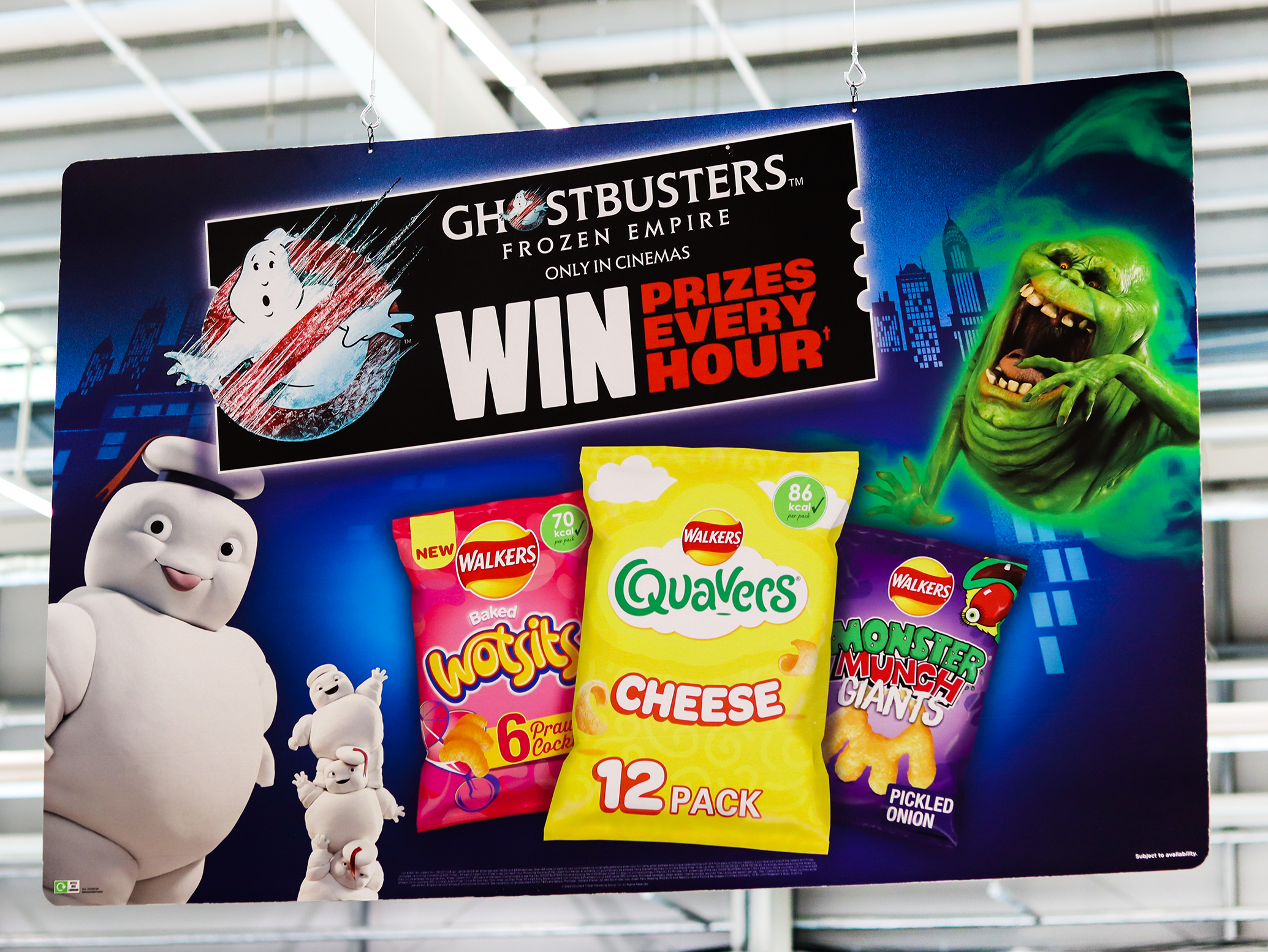
In retail, especially within convenience and impulse-led categories, conversion can be influenced long before the final decision at shelf - if brands know how to engineer the journey effectively. Sampling builds familiarity. Rewards reduce hesitation. Retail media and POS interrupt autopilot behaviour. Digital engagement simplifies action. But the real impact comes from understanding how these elements work together - and how they should adapt differently during demand-building phases versus peak conversion periods.
That’s where Conversion Theatre comes in.
What is Conversion Theatre?
Conversion Theatre is the strategic orchestration of retail experiences designed to influence shopper behaviour before, during and at the moment of choice.
Unlike traditional shopper marketing, which often focuses on isolated tactics, Conversion Theatre treats every touchpoint as part of a connected behavioural journey. Each interaction has a specific role: attracting attention, building confidence, simplifying decisions or triggering action.
The goal is not simply to increase visibility.
It is to make the brand easier to choose.
This distinction matters because awareness alone rarely guarantees conversion. In fast-moving retail environments, shoppers operate on habit, speed and cognitive shortcuts. Research from Nielsen suggests shoppers make many purchase decisions in just a few seconds, particularly in convenience-led missions where attention is limited and decision fatigue is high.
The brands outperforming in-store and boosting conversion are not necessarily the loudest. They are the ones reducing friction most effectively.
Conversion happens before shoppers reach the shelf
One of the biggest misconceptions in retail marketing is that conversion happens only in the final seconds before purchase.
In reality, the decision-making process begins much earlier.
A shopper who sampled a product last week, saw a compelling retail media message yesterday and then encounters strong POS signage in-store is not making an isolated decision. They are responding to a sequence of behavioural influences that progressively reduce uncertainty and increase familiarity.
This is where many retail strategies fail.
Sampling campaigns are often disconnected from retail execution. Digital engagement is separated from in-store conversion. Promotional mechanics operate independently from experiential activity.
But shopper behaviour does not work in silos.
The most effective retail strategies engineer experiences across the entire path to purchase.
The four behavioural roles behind Conversion Theatre
At the heart of Conversion Theatre are four distinct behavioural functions: Interrupt, Reassure, Simplify and Convert.
The power comes not from using more tactics, but from assigning each touchpoint a precise role within the shopper journey.
1. Interrupt - Break autopilot behaviour
Shoppers move quickly. Especially in convenience and impulse environments, most purchasing behaviour is habitual.
To create conversion opportunities, brands must first interrupt automatic behaviour patterns.
This can be achieved through:
- Sampling and live demonstrations
- High-impact POS
- Retail media screens
- Experiential activations
- Secondary displays
Research consistently shows experiential interactions significantly improve brand recall and engagement compared with passive advertising alone.
If nothing interrupts attention, the shopper never consciously considers the product.
2. Reassure - Reduce perceived risk
Once attention is captured, the next challenge is confidence.
This is particularly important for:
- New product launches
- Premium products
- Product switching moments
- Unfamiliar categories
Sampling is especially powerful here because it removes uncertainty immediately. Vouchers, “best seller” messaging and social proof also help reassure shoppers that trying something new is a safe decision. Event Marketer Research shows consumers are significantly more likely to purchase after engaging with live brand experiences.
Behaviourally, reassurance reduces the psychological cost of switching.
3. Simplify - Make the choice easy
Complexity slows conversion.
In busy retail environments, shoppers rarely want more information. They want faster decisions.
That is why high-performing retail conversion strategies focus on:
- Hero SKUs
- Clear messaging
- Simple calls to action
- Easy redemption mechanics
- Strong visual navigation
Behavioural science shows that too much choice or complexity can reduce decision-making confidence and slow conversion. It repeatedly demonstrates that reducing cognitive effort increases decision likelihood. PWC research also increasingly highlights the importance of seamless, low-friction shopping experiences across channels.
The easiest decision often becomes the chosen one.
4. Convert - Trigger immediate action
Attention and intent alone are not enough.
The final stage of Conversion Theatre is creating a clear trigger for action now.
This may include:
- Instant vouchers
- Scan-to-redeem mechanics
- Limited-time offers
- Sampling-to-purchase journeys
- QR-led rewards
Importantly, conversion mechanics perform best when previous stages have already reduced friction and built familiarity.
That is why orchestration matters more than isolated execution.
Why integration changes performance
One of the most important principles behind Conversion Theatre is that no single tactic should try to do everything.
Retail media may interrupt attention but cannot fully remove product hesitation. Sampling builds confidence but may not create urgency. POS simplifies decisions but only if awareness already exists.
The commercial advantage comes from connecting these tools strategically.
For example:
- Sampling creates familiarity before peak trading periods
- Retail media reinforces recognition during shopping missions
- POS simplifies decisions at shelf
- Digital rewards accelerate immediate purchase
Together, these touchpoints create a compounded behavioural effect.
Individually, they often underperform.
BUILD versus PEAK - the timing strategy many brands miss
Perhaps the most overlooked aspect of retail conversion is timing.
The role of conversion activity changes depending on whether brands are building future demand or capitalising on peak purchasing periods.
BUILD phase
During demand-building periods, the focus should be:
- familiarity
- education
- trial
- reducing future hesitation.
This is where:
-
- sampling
- experiential engagement
- digital interaction
- discovery-led activity
play their strongest role.
The objective is not immediate conversion alone. It is conditioning future purchase behaviour.
PEAK phase
During peak conversion periods, shopper behaviour changes.
Speed, simplicity and urgency become more important.
At this stage:
-
- retail theatre
- bold POS
- instant rewards
- digital prompts
- simplified messaging
become critical conversion drivers.
The brands that perform best during peak periods are usually those that have already reduced friction earlier in the journey.
Why Conversion Theatre matters now
Modern retail environments are becoming harder to win in.
Shoppers are exposed to more advertising than ever. Loyalty is weaker and attention spans are shorter. Retail journeys are increasingly fragmented across physical and digital channels.
At the same time, brands face increasing pressure to prove measurable ROI from shopper marketing investment.
This is why conversion-focused retail strategy is becoming more important.
Conversion Theatre provides a more adaptive approach - one that combines behavioural science, experiential engagement, retail media and strategic timing to influence shopper decisions more effectively.
In today’s retail landscape, visibility alone is no longer enough.
The brands driving the strongest retail performance and improving conversion are the ones engineering behaviour before, during and at the moment of choice.
How CPM helps brands engineer Conversion Theatre
At CPM, we help brands design and deliver Conversion Theatre strategies that influence shoppers before, during and at the moment of choice. Rather than treating sampling, experiential, retail engagement and conversion activity as isolated tactics, we connect them into integrated programmes designed to drive measurable behavioural impact.
Our approach combines:
-
- Product sampling and demos that build familiarity, reduce hesitation and encourage trial
- Brand ambassadors and active selling that create human connection, educate shoppers and drive immediate action
- Experiential activations that immerse consumers in memorable brand experiences and increase emotional engagement
- Retail theatre and in-store engagement that interrupt autopilot behaviour and increase visibility at critical decision moments
- Digital integration, including QR journeys, mobile redemption and data capture, to connect physical engagement with measurable conversion
- Insight-led planning and reporting to optimise campaigns across both BUILD and PEAK trading phases
- Underpinned by ensuring you always have product there in key stores for people to buy with our Merchandising Services.
Whether launching NPD, driving seasonal demand or accelerating retail conversion, our Liquid Approach® combines strategy, data, technology and amazing people to adapt activity dynamically across the shopper journey - helping brands maximise the effectiveness of every activation and commercial investment.


 2 minute read