


Skip to content
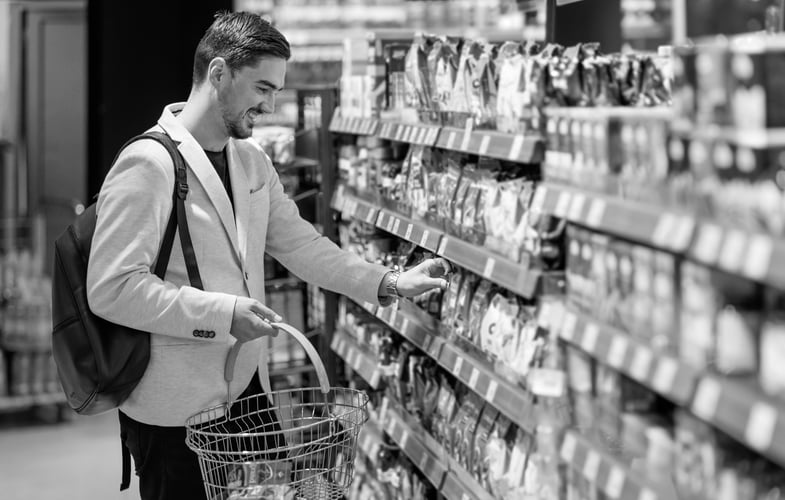
Man shopping in a convenience store

How to Grow FMCG Sales in the UK Convenience Channel - GUIDE

The UK convenience market is worth £49.2bn and projected to reach more than £56bn by 2030 - but growth is increasingly competitive and fragmented.

For FMCG brands, success in convenience is no longer just about distribution. It requires:

    • winning in-store execution
    • influencing shopper behaviour
    • aligning push and pull strategies

This guide breaks down how to grow sales in the convenience channel, based on current market trends, shopper behaviour, and proven retail execution strategies.

1 Understanding the UK convenience opportunity

The UK convenience channel remains a critical route to market for FMCG brands - but growth is becoming harder to unlock.

While footfall has stabilised, performance at store level is under pressure. Shoppers are more decisive, more time-poor, and less tolerant of friction, while retailers are operating with fewer people and higher costs.

This is shifting where and how growth is won.

Key trends

icon 1.3
1 Execution now drives performance

In convenience, distribution alone is no longer enough. With faster shopper missions and limited attention in-store, availability and visibility at key moments are critical.

Gaps at front-of-store, chillers, and secondary sitings directly impact rate of sale -making execution the primary driver of performance.

icon 2
2 Shopper behaviour is faster and mission-led

Convenience shopping is increasingly defined by speed and purpose. Missions are short, decisions are quick, and tolerance for friction is low.

Brands must win in seconds - by being visible, relevant, and easy to purchase in the moments that matter most.

 

icon 3
3 Retailers expect more, with less time

Retailers are managing staffing pressure, rising costs, and operational complexity. As a result, they expect suppliers to deliver:

  • simple, low-friction activation
  • clear commercial value
  • support that fits around how stores operate

Brands that add complexity - or fail to deliver value quickly - risk being deprioritised.

 

location icon
4 Local relevance is increasing

Store performance is becoming more location-specific, with missions and ranging varying significantly by store type and community.

A one-size-fits-all approach is less effective. Growth increasingly comes from understanding how each store works - and tailoring activity accordingly.

shelf icon
5 Space and value pressure are intensifying

With fewer SKUs per store and rising competition for space, every product must justify its position.

Value is no longer just about price -it’s about clarity, relevance, and performance at shelf.

The Opportunity: The convenience channel still offers significant growth potential - but success now depends on precision.

Brands that win are those that:

    • execute consistently
    • align to shopper missions
    • support retailers effectively
    • focus effort where it drives the greatest return

2 Why brands struggle to grow in the convenience channel

1 Distribution doesn’t equal execution

Securing distribution in convenience is only the first step. Unlike larger retail formats, store-level execution varies significantly, and products often fail to achieve the visibility or availability needed to drive sales.

Even when products are listed, brands frequently encounter:

  • out-of-stocks in high-value stores
  • poor shelf positioning or lack of secondary displays
  • inconsistent implementation of agreed plans

In this environment, execution is what converts distribution into revenue. Without it, even strong products with national support can underperform.

2 A highly fragmented retail environment

The convenience channel is made up of thousands of independent stores, symbol groups, and wholesalers - each with different priorities, ranging, and operational standards.

This creates several challenges for brands:

  • limited control over in-store execution
  • inconsistent compliance across store networks
  • difficulty scaling activity efficiently

What works in one group or region may not translate to another. As a result, brands often struggle to deliver a consistent shopper experience or maintain momentum across their estate.

3 Strategies built for supermarkets don't translate

Many FMCG strategies are designed with larger retail formats in mind - where range is wider, space is greater, and shopper journeys are more predictable.

Convenience retail operates very differently:

  • missions are faster and more mission-led (top-up, impulse, food-to-go)
  • space is limited, making visibility critical
  • purchase decisions are often made in seconds

As a result, tactics that work in grocery multiples - such as broad range expansion or large-scale promotions - don’t always deliver in convenience. Brands need channel-specific strategies that reflect how shoppers actually behave in these environments.


4 Limited use of store data

While many brands have access to EPOS and sales data, it is often underutilised when it comes to driving action in convenience.

Without a clear, data-led approach, brands can struggle to:

  • identify underperforming stores or regions
  • prioritise high-value opportunities
  • optimise range and execution at store level

This leads to a reactive approach, rather than a targeted strategy focused on where growth can be unlocked most effectively.


The Result: Taken together, these challenges mean that many brands achieve presence without performance in the convenience channel.

Growth requires more than distribution - it depends on:

  • consistent execution
  • targeted investment
  • and a strategy aligned to the realities of convenience retail

3 The three drivers of growth in the convenience channel

To unlock sustainable growth in the convenience channel, FMCG brands need to go beyond distribution and focus on the factors that directly influence in-store performance.

Across the market, successful brands consistently outperform by focusing on three core drivers: execution, data, and integration.

Perfect store execution

In convenience retail, growth is won or lost at the shelf. With limited space and fast shopper decision-making, even small improvements in execution can have a significant impact on sales.

Perfect store execution means ensuring that every store delivers the fundamentals consistently:

- Availability – products are always in stock in the right locations
- Visibility – strong shelf positioning, secondary displays, and effective POS
- Compliance – agreed plans and promotions are implemented correctly

Unlike larger formats, convenience stores often lack centralised control, which makes execution harder to maintain at scale. This is why brands that invest in consistent field support and in-store activation typically outperform those that rely solely on distribution.

Ultimately, execution is what turns opportunity into sales - without it, even the best strategies fail to deliver.

Data-led optimisation

With thousands of stores and varying performance across locations, a one-size-fits-all approach to convenience simply doesn’t work. Growth comes from identifying where the real opportunities lie - and acting on them.

By using EPOS data, store-level insights and field feedback, brands can:

- pinpoint underperforming stores and regions
- prioritise high-value outlets with the greatest growth potential
- optimise range, space, and promotional activity
- track the impact of execution in near real-time

This enables a shift from reactive to proactive decision-making. Instead of spreading resources evenly, brands can focus investment where it will drive the greatest return.

In a fragmented channel, data provides the clarity needed to scale effectively

Integrated Push & Pull strategy

One of the biggest barriers to growth in convenience is the disconnect between sales activity (“push”) and marketing activity (“pull”).

Push includes distribution, field sales, merchandising, and in-store execution

Pull includes brand awareness, shopper marketing, and demand generation

Many brands invest heavily in one without fully aligning the other. The result is missed opportunities - for example:

- strong marketing campaigns without in-store availability
- well-distributed products with low shopper demand

Growth comes from integrating both sides into a single, coordinated strategy. This means:

- ensuring products are visible and available when demand is created
- aligning field activity with marketing campaigns
- reinforcing and encouraging shopper decisions at the point of purchase

When push and pull work together, brands can maximise both reach and conversion - driving stronger, more sustainable performance in the convenience channel.


Bringing it together: These three drivers - execution, data, and integration - form the foundation of successful convenience strategies.

Brands that focus on all three are better positioned to:

    • improve rate of sale
    • increase return on investment
    • build stronger relationships with retailers

Most importantly, they move beyond simply being present in the channel to actively winning within it.

4 What good looks like in the convenience channel

When FMCG brands successfully align execution, data, and strategy in the convenience channel, the impact is both measurable and sustainable.

Rather than isolated wins, they see consistent improvements across distribution, performance, and retailer engagement.

Stronger rate of sale at store level

High-performing brands don’t just increase distribution - they improve how each store performs.

By focusing on execution and visibility, they achieve:

    • faster product turnover
    • increased basket contribution
    • stronger performance in high-footfall locations

Instead of relying on constant new listings, growth comes from maximising the value of existing distribution.

Improved availability & compliance

With thousands of stores and varying performance across locations, a one-size-fits-all approach to

One of the most immediate impacts of better execution is a reduction in lost sales.

Brands that invest in store-level support typically see:

    • fewer out-of-stocks in key stores
    • higher compliance with agreed plans and promotions
    • more consistent in-store standards across regions

This creates a more reliable shopper experience - and ensures that demand is converted into sales.

More effective use of investment

Without clear prioritisation, investment in convenience can be spread too thinly. High-performing brands take a more targeted approach.

By using data to focus activity, they achieve:

    • higher ROI from field sales and merchandising
    • better allocation of resource to high-value stores
    • improved performance from promotional activity

The result is not just growth, but more efficient growth.

Stronger retailer relationships

Convenience retail is built on relationships, particularly within independent and symbol group environments.

Brands that consistently deliver in-store value are more likely to:

    • secure better visibility and placement
    • gain support for new listings or initiatives
    • build long-term partnerships with retailers

This creates a virtuous cycle, where strong execution leads to stronger collaboration - and ultimately, better performance.

Scalable, repeatable growth

Perhaps most importantly, successful brands move from one-off wins to a model that can be scaled.

With the right combination of execution, data, and strategy, they are able to:

    • replicate success across regions and store groups
    • maintain performance over time
    • adapt quickly to changing shopper behaviour

This is what separates brands that “test and learn” from those that consistently grow in the convenience channel.

The bottom line: Growth in convenience isn’t driven by a single tactic - it’s the result of getting the fundamentals right, consistently, across a complex and fragmented channel.

Brands that do this well don’t just gain presence - they build sustained, measurable performance.

Delivering this level of consistency and performance across thousands of stores requires the right combination of strategy, data, and in-store execution.

This is where CPM supports FMCG brands to turn opportunity into measurable growth in the convenience channel.

5 How CPM helps brands grow in Convenience

Growth in the convenience channel depends on aligning Push (distribution and execution) with Pull (shopper demand and conversion).

Many brands invest in one without fully connecting the other - leading to missed sales, wasted spend, and inconsistent performance. CPM’s approach is designed to bring both together – finding untapped sales, growth and efficiency and turning strategy into measurable in-store outcomes.

1 Aligning Push & Pull at store level

CPM ensures that:

    • products are available, visible and compliant (push)
    • at the exact moment shopper demand is created (pull)

By connecting field execution with retailer and shopper behaviour and mission-based activation and promotion, brands maximise both reach and conversion.


2 Right store, right time, right action

Static call cycles don’t work in a fast-moving, fragmented channel.

Using EPOS, field and digital data, CPM identifies:

    • where intervention is needed
    • when it will have the most impact
    • and what action will drive return

This ensures both push and pull activity are focused on the highest-value opportunities.

3 Speed without wasted cost

In convenience, speed is critical - but constant physical coverage is inefficient.

CPM combines field, shared services and digital activation to resolve distribution gaps quickly - often without a store revisit - ensuring demand is not lost due to availability issues.


4 Availability as a trigger - not a risk

Rather than relying on fixed visit cycles, CPM treats availability as a live signal.

When products are not available or stop selling, action is triggered - protecting both distribution (push) and shopper conversion (pull).

When stores are performing well, effort is reduced - maximising ROI.


5 Smarter time in store

Every visit is focused on the actions most likely to drive sales.

Using data-led guidance, CPM prioritises:

    • the SKUs that matter most
    • the interventions that convert

ensuring field activity supports both availability and shopper decision-making.

The Result

By integrating push and pull activity through a dynamic combination of field, digital and shared service models, CPM enables brands to:

    • improve availability and visibility
    • convert shopper demand more effectively
    • recover distribution faster
    • and deliver more consistent, scalable growth in convenience
